
Beard Transplant Success Rate: What to Expect
Quick Answer
What Is the Success Rate of a Beard Transplant?
A beard transplant has a high success rate when performed by an experienced surgeon using modern techniques such as Follicular Unit Excision (FUE) or Follicular Unit Transplantation (FUT). Most transplanted hair follicles survive, establish a new blood supply, and produce permanent beard growth. Success depends on factors such as the quality of the donor hairs, the number of grafts, proper aftercare, and individual healing.
Key Takeaway
Beard transplants generally have high success rates
Healthy donor hair is essential for good results
FUE is one of the most common beard transplant techniques
The number of grafts affects beard density
Proper beard transplant recovery supports successful healing
Most transplanted hair follicles produce long-term growth
Following aftercare instructions helps improve outcomes
Choosing an experienced clinic increases the likelihood of natural-looking results
A full, even beard has become an important style preference for many men. While some naturally develop thick facial hair, others experience patchy growth, uneven density, or areas that never fully develop. These concerns often lead people to consider a beard hair transplant as a long-term solution.
One of the most common questions patients ask is about the beard transplant success rate. Understanding what contributes to successful results, how the procedure works, and what to expect during recovery can help you make an informed decision before beginning treatment.
What Is a Beard Transplant?
A beard transplant is a hair restoration procedure that transfers healthy hair follicles from one part of the body to the beard area.
In most cases, donor hairs are taken from the back or sides of the scalp because these areas are more resistant to hair loss. The follicles are then carefully placed into areas of the beard where additional density or coverage is needed. The goal is to create a natural beard that matches your facial features, hair direction, and existing beard growth.
What Is the Average Beard Transplant Success Rate?
Modern beard transplant procedures have excellent success rates when performed by experienced surgeons. Most transplantedhair follicles successfully establish themselves and continue growing permanently.
Although every patient is different, success depends on several factors, including:
The quality of the donor hairs
The health of the donor site
Surgical technique
Proper aftercare
Individual healing response
Patients who carefully follow recovery instructions often experience excellent long-term outcomes.
What Factors Affect Beard Transplant Success?
Several factors influence how well a beard transplant heals and grows.
Donor Hair Quality
Healthy donor hair is one of the biggest factors affecting success. Strong follicles are more likely to survive the transplant and produce healthy beard growth.
Surgical Technique
The surgeon's experience and precision play an important role. Proper placement helps create a beard that looks natural and grows in the correct direction.
Number of Grafts
The number of grafts needed depends on your goals and the size of the treatment area. Larger procedures may require additional planning to achieve balanced density.
Healing Response
Each person heals differently. Age, general health, and following aftercare instructions all contribute to successful healing.
Which Beard Transplant Technique Has the Highest Success Rate?
Most clinics perform beard transplants using Follicular Unit Excision (FUE) because it is a minimally invasive technique that allows individual follicles to be harvested with precision.
Benefits of FUE follicular unit extraction include:
Minimal scarring
Faster recovery
Precise graft placement
Natural-looking results
Because individual follicles are removed one at a time, FUE allows surgeons to carefully match the natural direction of facial hair.
What About FUT Beard Transplants?
Although less common for beard restoration, Follicular Unit Transplantation (FUT) may still be appropriate in selected cases. During a follicular unit transplant, a strip of hair is removed from the donor site before individual grafts are prepared for transplantation.
The choice between FUT and a FUE hair transplant depends on several factors, including donor hair availability, treatment goals, and the surgeon's recommendation.
Does the Number of Grafts Affect Success?
Yes. The number of grafts influences beard density, but it is not the only factor that determines success. Some patients need only a few hundred grafts to fill patchy areas, while others require over 2,000 grafts to create a fuller beard.
Rather than focusing only on graft numbers, surgeons also consider:
Existing facial hair
Beard shape
Hair thickness
Facial symmetry
Long-term goals
Careful planning often produces more natural results than simply transplanting the highest possible number of grafts.
How Long Does Beard Transplant Recovery Take?
Beard transplant recovery happens gradually over several months.
Most patients experience:
First Week
Mild redness
Small scabs
Temporary swelling
Weeks Two to Four
The transplanted area continues healing, and most scabs naturally fall away.
Months One to Three
Many transplanted hairs temporarily shed. This is a normal part of beard transplant recovery and should not be mistaken for treatment failure.
Months Three to Six
New beard growth gradually begins as the transplanted follicles become active again.
Nine to Twelve Months
Most patients enjoy a fuller, more natural beard with mature growth.
Does Beard Growth Look Natural?
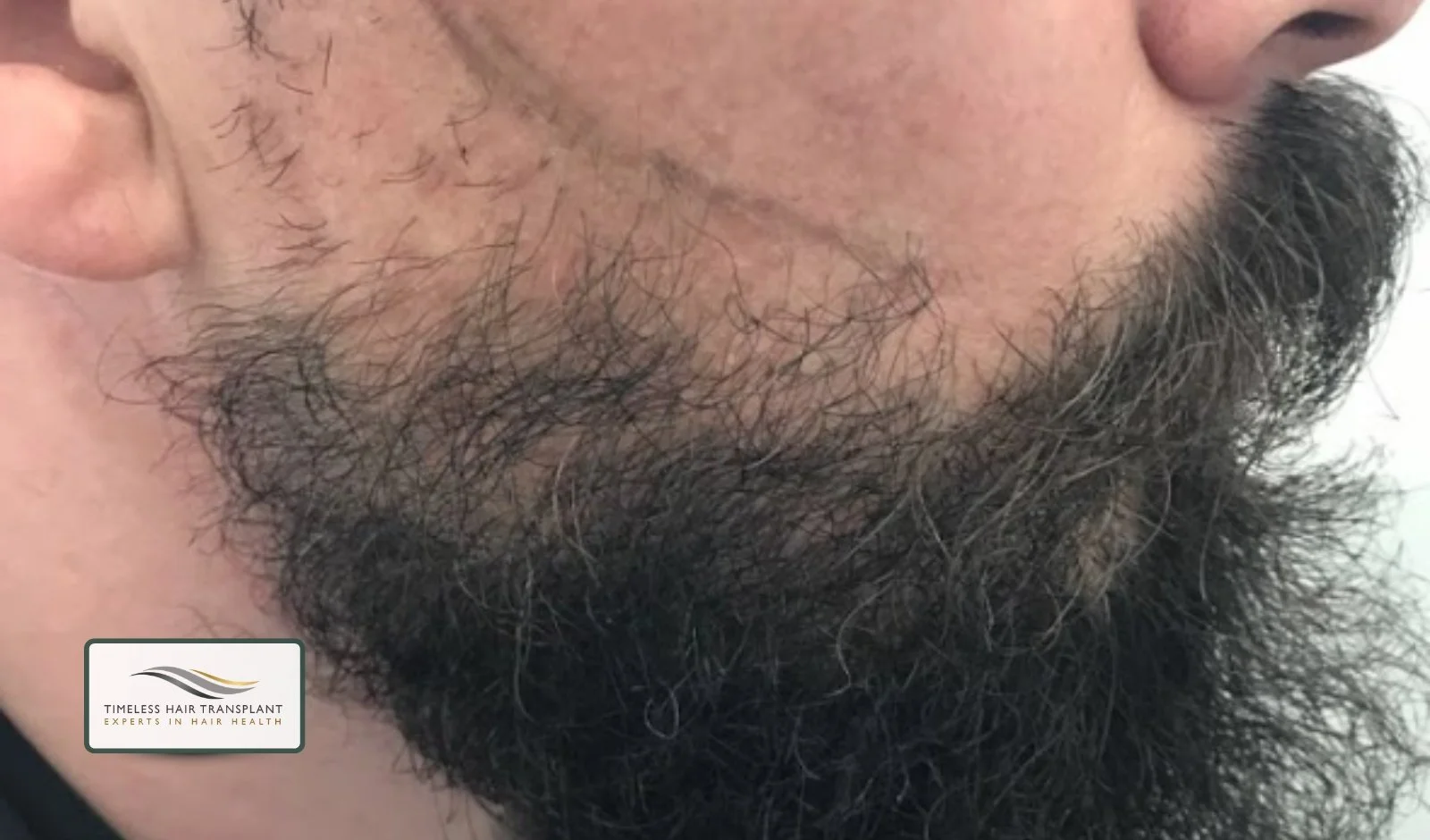
Yes, one of the main goals of modern beard transplantation is to create a natural beard. Experienced surgeons carefully place each follicle to match the natural angle, direction, and pattern of facial hair.
Factors that contribute to natural-looking results include:
Hair thickness
Curl pattern
Facial symmetry
Strategic graft placement
These details help ensure the transplanted beard blends seamlessly with existing facial hair.
Are Beard Transplant Results Permanent?
In most cases, yes. Once transplanted hair follicles establish a blood supply, they continue growing like normal facial hair. Because they retain the characteristics of the donor hairs, the results are generally considered long-term.
Patients can trim, shave, and style their beards normally after recovery is complete.
Can a Beard Transplant Fail?
A beard transplant has a high success rate, but like any medical procedure, there is no guarantee of perfect results. In some cases, patients may experience lower graft survival or uneven beard growth if healing does not go as planned.
Factors that may affect success include:
Poor aftercare
Smoking during recovery
Infection
Existing medical conditions
Inexperienced surgical technique
Following your surgeon's instructions before and after the procedure helps reduce these risks and gives transplanted hair follicles the best chance of surviving.
What Are the Side Effects of Beard Transplants?
Most side effects of beard transplants are mild and temporary. They are a normal part of the healing process and usually improve within a few weeks.
Common side effects include:
Mild swelling
Redness
Small scabs
Temporary itching
Slight tenderness
Some patients also experience temporary shedding of transplanted hairs, often called shock loss. Although this can be concerning, it is expected and is usually followed by new beard growth in the months ahead.
Does Age Affect Beard Transplant Success?
Age alone does not determine whether a beard transplant will be successful. Instead, surgeons focus on the quality of the donor hairs, overall health, and the stability of facial hair growth.
Younger patients may be advised to wait if their natural beard is still developing. Older patients with healthy donor areas often achieve excellent long-term results. A consultation helps determine whether the timing is right for treatment.
How Can You Improve Beard Transplant Success?
Patients play an important role in achieving the best possible outcome. Following aftercare instructions carefully helps protect the transplanted follicles while they establish a healthy blood supply.
Helpful recovery tips include:
Keep the beard area clean
Avoid touching or scratching the treated area
Follow washing instructions
Avoid smoking during recovery
Stay hydrated
Eat a balanced diet
Attend follow-up appointments
These simple steps help support healthy healing and improve the chances of successful beard growth.
What Results Can You Expect?
Every patient is different, but most people notice gradual improvements throughout the first year after surgery.
A typical timeline includes:
First Month - The scalp and beard area continues healing. Some transplanted hairs may begin to shed.
Months 3 to 4 - New hairs start growing from the transplanted follicles.
Months 6 to 9 - The beard becomes noticeably fuller as density improves.
Months 9 to 12 - Most patients see their final result, with a thicker and more natural-looking beard.
Because facial hair grows at different rates, some patients continue to notice subtle improvements beyond the first year.
Is a Beard Transplant Worth It?
For many men with patchy facial hair or areas that never developed naturally, a beard transplant offers a permanent solution that can improve confidence and appearance. Unlike temporary cosmetic products, a beard transplant uses your own hair follicles to create lasting growth. Once fully healed, the transplanted beard can be shaved, trimmed, and styled just like natural facial hair.
The procedure is considered minimally invasive, and most patients return to normal daily activities within a short period while continuing to see improvements over the following months.
Final Thoughts
A beard transplant has a high success rate when performed by an experienced surgeon using modern techniques such as FUE or FUT. Healthy donor hair, careful graft placement, and proper aftercare all play an important role in achieving natural-looking, long-term results.
If you are considering a beard hair transplant, understanding the recovery process and following your surgeon's guidance can help maximise graft survival and support healthy beard growth. With realistic expectations and the right treatment plan, many patients achieve a fuller beard that lasts for years.
Achieve a Fuller, Natural-Looking Beard
A successful beard transplant starts with expert planning and personalised care. Choosing an experienced clinic and following the right aftercare steps can help you achieve natural-looking, long-term results.
Call +44 (0) 7516294471 or book a free consultation with Timeless Hair Transplant today to learn whether a beard hair transplant is the right solution for you.
Frequently Asked Questions
-
A beard transplant has a high success rate, with most transplanted hair follicles surviving and producing permanent beard growth when the procedure is performed by an experienced surgeon and proper aftercare is followed.
-
Initial beard transplant recovery usually takes one to two weeks, while new beard growth typically begins after three to four months. Most patients see their final results within nine to twelve months.
-
Yes. Once transplanted hair follicles establish themselves in the beard area, they usually continue growing permanently and can be shaved, trimmed, and styled like natural facial hair.
-
Follicular Unit Excision (FUE) is one of the most commonly used techniques because it is minimally invasive, heals quickly, and produces natural-looking results. Success depends on the surgeon's experience and proper aftercare.
-
Yes. The number of grafts influences beard density, but successful results also depend on donor hair quality, graft placement, and individual healing.
-
Common side effects include redness, swelling, scabbing, itching, and temporary shedding of transplanted hairs. These effects usually improve as the healing process continues.
-
Although beard transplant success rates are high, factors such as poor aftercare, smoking, infection, or underlying health conditions may reduce graft survival and affect the final outcome.
-
Most patients notice new beard growth around three to four months after the procedure. Density continues to improve over the following months as transplanted hair follicles mature.
-
Yes. An experienced surgeon carefully places donor hairs to match the natural direction, angle, and pattern of facial hair, helping create a natural-looking beard.
-
Good candidates are men with patchy facial hair, uneven beard growth, or hair loss in the beard area who have healthy donor hairs and realistic expectations about the procedure.
