
Hair Fall in Menopause: Causes and What You Can Do
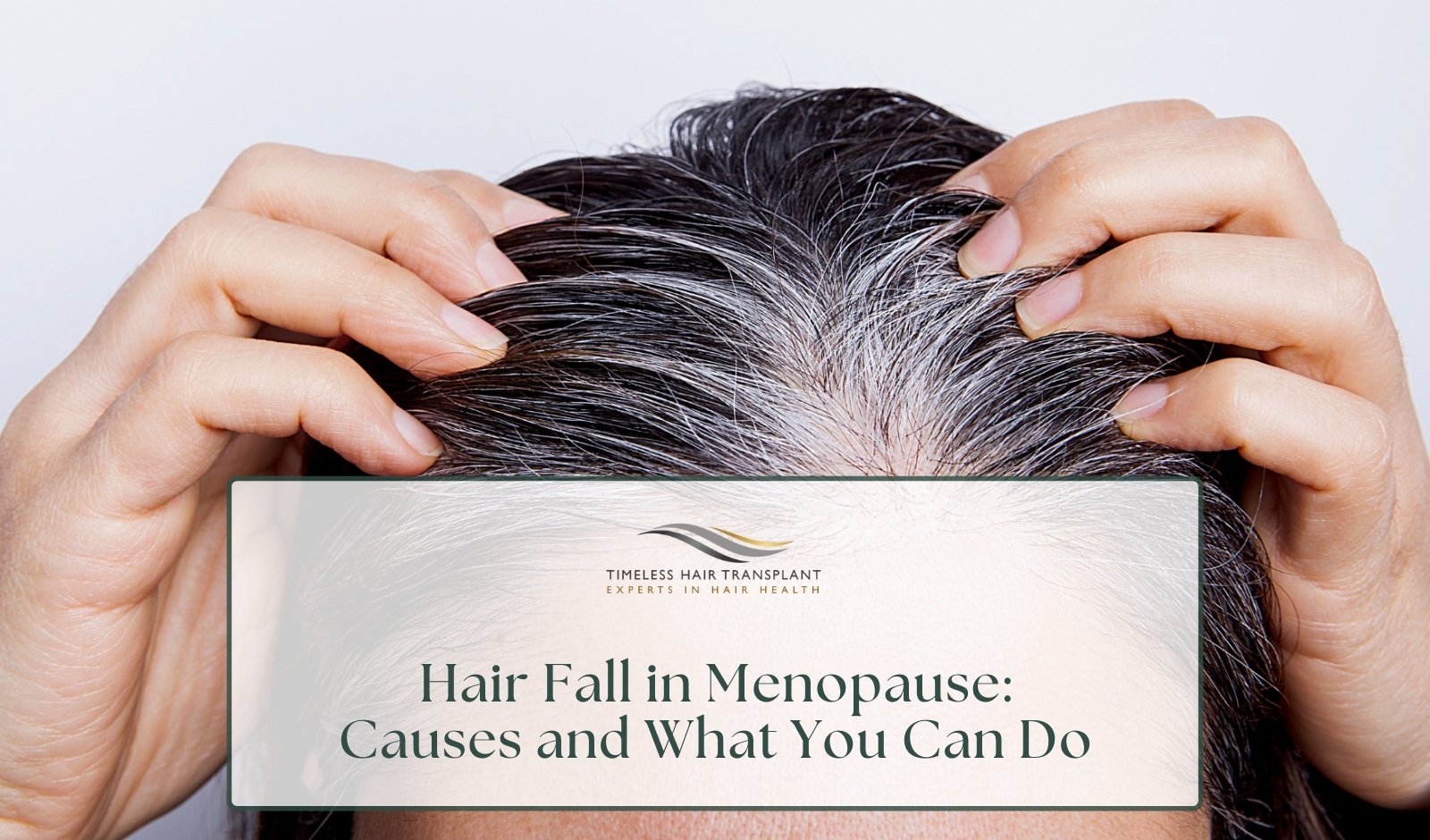
Quick Answer
What causes hair fall in menopause?
Hair fall in menopause is mainly caused by changes in hormone levels, especially a drop in oestrogen levels. These hormonal shifts can affect the hair follicle, leading to increased hair shedding, thinning, and slower hair growth. While common, there are treatment options available to support healthy hair growth and manage hair loss in women during this stage.
Key Takeaway
Hair fall in menopause is linked to changing hormone levels
Lower oestrogen levels can affect hair growth cycles
Female pattern hair loss may become more noticeable
Increased hair shedding is common during this stage
Early care can help support healthy hair growth
Treatment options are available for menopausal women
Hair fall in menopause is a common concern for many women. As the body goes through hormonal changes, it can affect not only overall health but also the condition of the hair and scalp.
Many menopausal women notice increased hair shedding, thinning hair, or changes in texture. These changes can feel sudden and may impact confidence, especially if hair density continues to decrease over time.
Understanding how menopause and hair loss in women are connected can help you take the right steps early. By identifying the cause and exploring treatment options, it is possible to manage hair fall and support healthier hair growth.
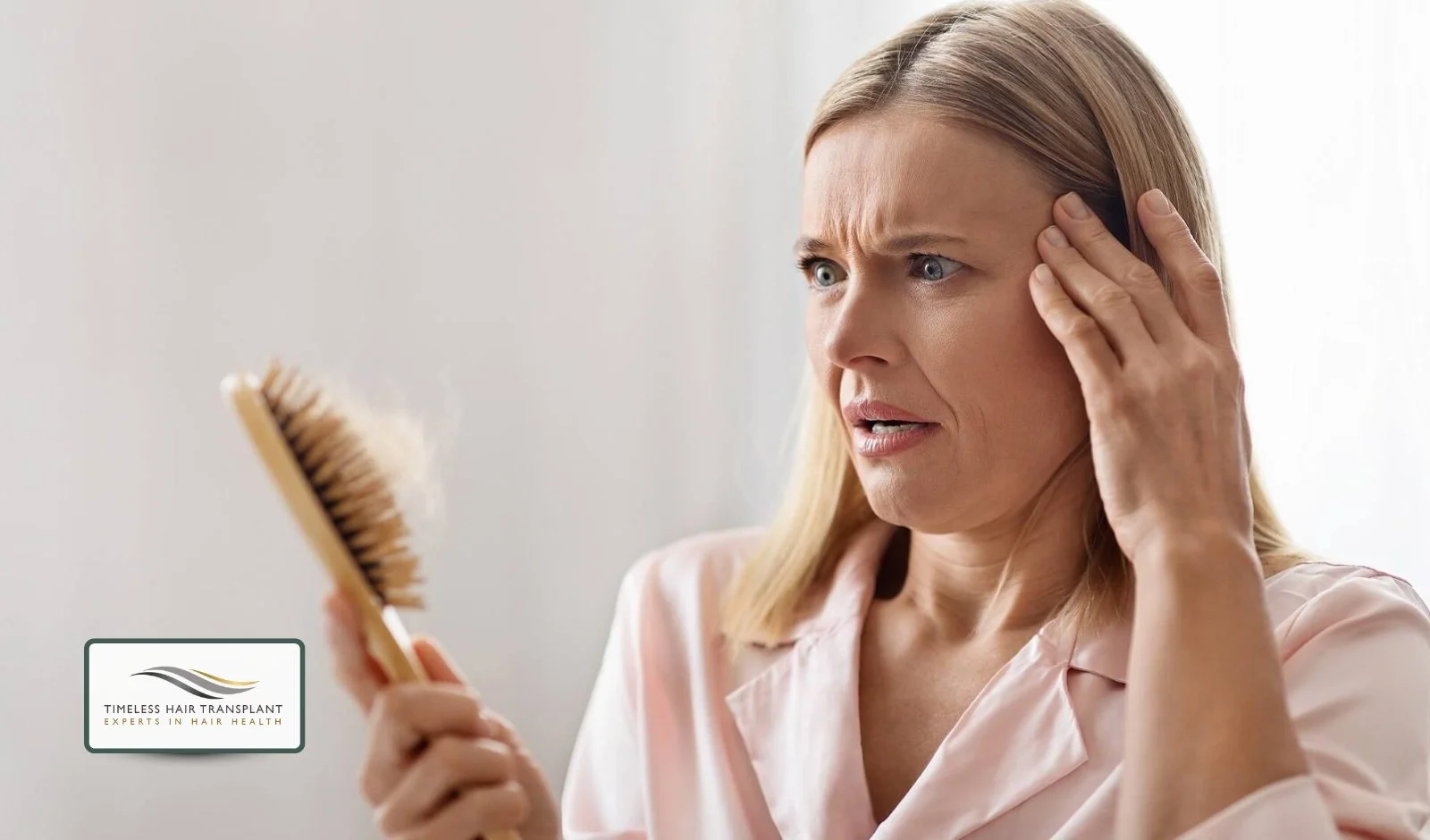
Why Hair Fall Happens During Menopause
Hair fall during menopause is closely linked to hormonal changes. As women aged move into the perimenopausal and menopausal stages, hormone levels begin to fluctuate.
One of the key changes is a decline in oestrogen levels. Oestrogen plays an important role in supporting hair growth and keeping hair in the growth phase for longer periods.
When oestrogen levels drop:
Hair grows more slowly
Hair follicles may shrink
More hair enters the shedding phase
At the same time, male hormones (androgens) may have a stronger effect, which can contribute to female pattern hair loss.

Common Types of Hair Loss in Menopause
Female Pattern Hair Loss
This is one of the most common types of hair loss in menopausal women. It usually appears as thinning on the top of the scalp rather than complete hair loss.
Telogen Effluvium
Telogen effluvium is a condition where a large number of hairs enter the resting phase at the same time. This leads to noticeable hair shedding and sudden hair fall.
General Hair Thinning
Some women experience overall thinning rather than specific bald areas. This can affect the appearance and volume of hair.
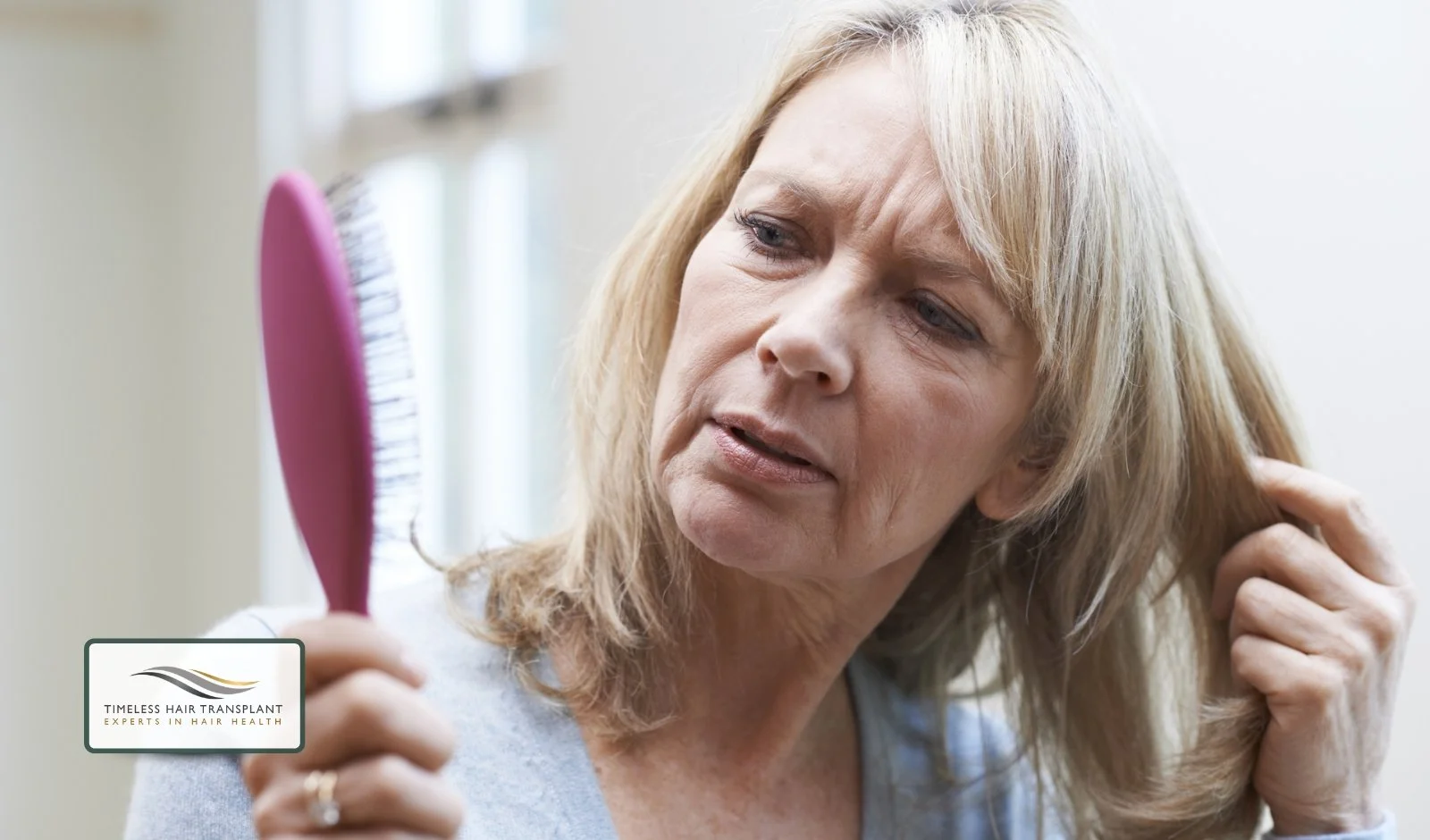
Symptoms of Hair Loss During Menopause
Hair loss during menopause may present in different ways.
Common signs include:
Increased hair shedding when brushing or washing
Thinning hair across the scalp
Reduced hair density
Slower hair growth
Changes in hair texture
These symptoms may occur alongside other menopause symptoms such as night sweats, fatigue, or mood changes.
The Role of Hormones in Hair Loss
Hormones play a major role in maintaining healthy hair growth.
During menopause:
Oestrogen levels decrease
Hormone levels become imbalanced
Male hormones may influence hair follicles more strongly
This imbalance can weaken the hair follicle and lead to increased hair fall.
Understanding this process helps explain why hair loss in women becomes more noticeable during menopause.
How Menopause Affects Hair and Scalp Health
Hormonal changes can also affect the overall condition of the hair and scalp.
You may notice:
Dryness in the hair and scalp
Increased sensitivity
Reduced shine and strength
These changes make hair more prone to breakage and thinning.
Proper care becomes essential during this stage to support healthy hair growth.
Treatment Options for Hair Loss in Menopause
There are several treatment options available for managing hair loss during menopause.
Lifestyle Changes
Improving diet, reducing stress, and maintaining overall health can support hair growth.
Medical Treatments
Doctors may recommend treatments depending on the cause of hair loss.
Hormone Replacement Therapy
Hormone replacement therapy (HRT) may help balance hormone levels in some cases. This can support hair growth, but it should always be discussed with a healthcare provider.
Hair Care Solutions
Using products designed for thinning hair can help improve the appearance and condition of hair.
Tips to Support Healthy Hair Growth
To manage hair fall and support healthy hair growth:
Eat a balanced diet rich in nutrients
Stay hydrated
Reduce stress levels
Use gentle hair care products
Avoid excessive heat styling
These steps help protect hair follicles and improve overall hair condition.
When to Seek Professional Help
If hair fall becomes excessive or continues for an extended period, it may be time to seek professional advice.
A specialist can:
Identify the cause of hair loss
Recommend appropriate treatment options
Monitor progress over time
Early intervention helps improve outcomes and prevent further hair loss.
Final Thoughts
Female hair loss during menopause is common and is mainly linked to hormonal changes, especially a drop in oestrogen levels. While thinning and shedding can feel worrying, understanding the cause helps you take practical steps to manage it.
With the right care, simple lifestyle changes, and suitable treatments, you can support healthy hair growth and reduce further loss. Acting early can make a difference and help you maintain both your hair and confidence during this stage of life.
Get Support for Menopause Hair Loss
If you are noticing hair thinning during menopause, the right support can help you manage it with confidence. Understanding the cause is the first step, and expert advice can guide you toward treatments that suit your hair and scalp condition.
At Timeless Hair Transplant, we assess your individual needs and recommend personalised solutions to support healthy hair growth. Call +44 (0) 7516294471 or book a free consultation to explore your options today.
Frequently Asked Questions
-
Yes, hair fall is common during menopause due to changes in hormone levels. As oestrogen levels decline, the hair growth cycle can become shorter, leading to increased hair shedding and thinning. While this is a normal part of the process, noticeable or excessive hair loss should still be monitored.
-
Hair loss in menopausal women is mainly caused by changes in hormone levels, especially reduced oestrogen. This shift can make hair follicles more sensitive to male hormones, which may lead to thinning and slower hair growth. Other factors, such as stress, nutrition, and overall health, can also contribute.
-
Yes, hair can grow back after menopause in many cases, especially if the underlying cause is managed early. With proper care, a healthy lifestyle, and suitable treatment options, it is possible to support healthier hair growth and improve hair density over time.
-
Telogen effluvium is a condition where more hair follicles than usual enter the resting phase of the hair growth cycle. This leads to increased hair shedding, often noticed during washing or brushing. It is usually temporary and can be triggered by hormonal changes, stress, or health conditions.
-
In some cases, hormone replacement therapy HRT may help balance hormone levels and reduce hair loss. Supporting oestrogen levels, it may improve hair growth conditions. However, it is not suitable for everyone and should only be considered under medical guidance.
-
Female pattern hair loss can be progressive, meaning it may worsen over time if not managed. However, early treatment and proper care can help slow the process and improve the appearance of hair. Many women are able to maintain better hair density with the right approach.
