

Quick Answer
What causes crown balding in females?
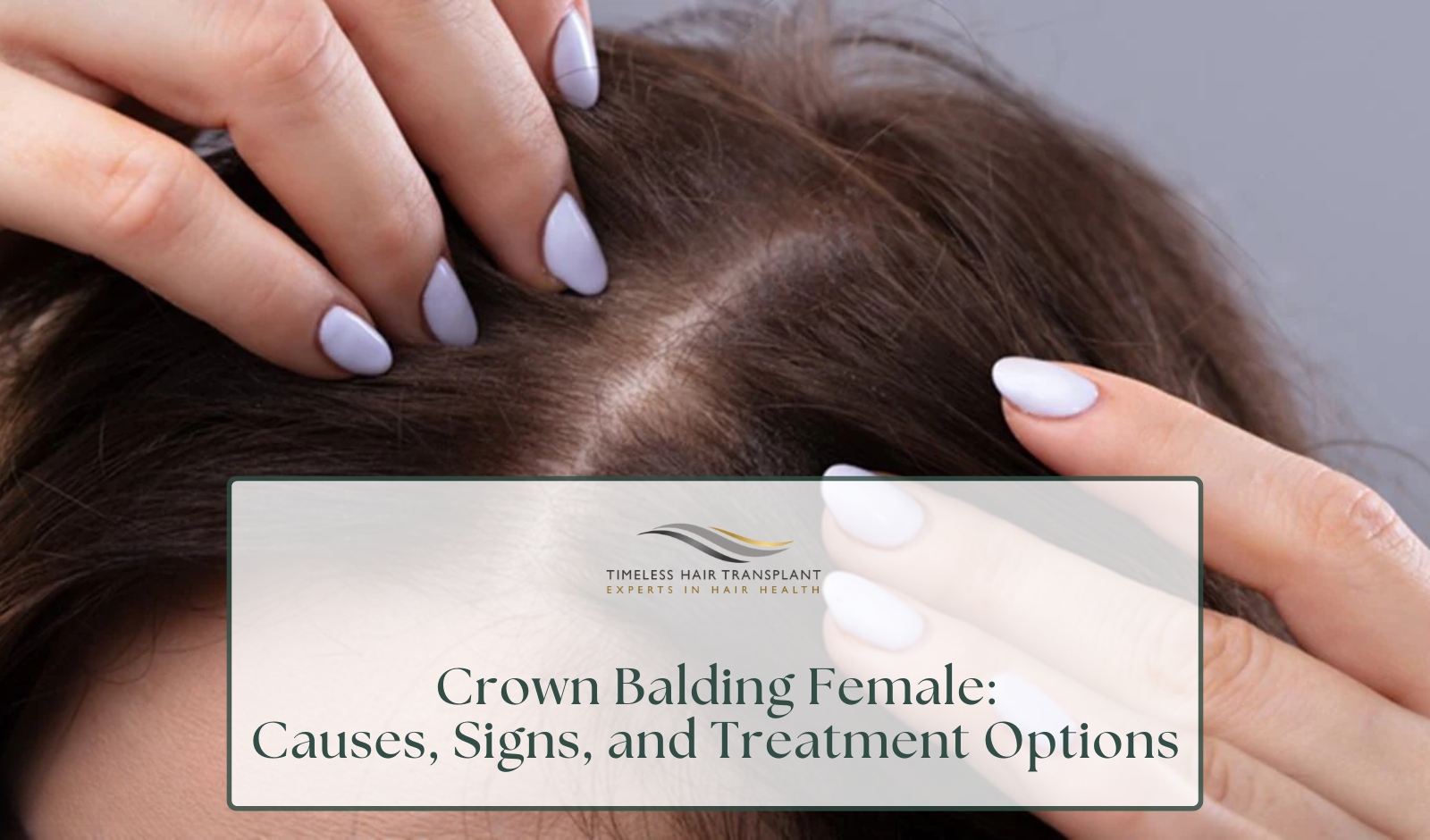
Crown balding in females is commonly caused by changes in hair follicles due to hormonal factors, genetics, or conditions such as androgenetic alopecia. This can lead to hair thinning, reduced hair density, and visible crown hair loss over time. While it can be concerning, there are treatment options available to help manage hair loss in women and support healthy hair growth.
Key Takeaway
- Crown balding in females is often linked to female pattern hair loss
- Hormones like dihydrotestosterone DHT can affect hair follicles
- Thinning hair at the crown is a common early sign
- Hair shedding may increase before visible thinning appears
- Early treatment can help improve hair density
- Professional advice helps identify the type of hair loss
Hair loss in women can occur in different patterns, with the crown of the scalp being one of the most commonly affected areas. Hair loss on the crown of women often begins gradually, with subtle thinning that becomes more noticeable over time.
Women experiencing thinning at the crown may notice reduced volume, a widening part, or increased visibility of the scalp. Understanding the causes of thinning crown hair in female pattern hair loss can help support early action and guide appropriate treatment options.
What Is Crown Hair Loss in Women?
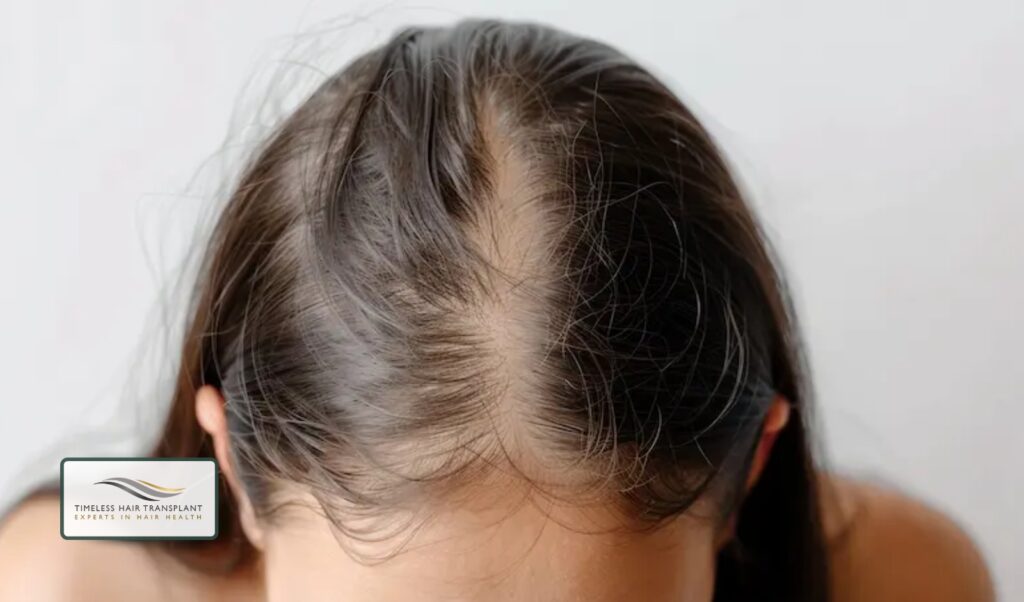
Crown hair loss refers to thinning or reduced hair density at the top of the scalp. Unlike receding hairlines, which affect the front, crown hair loss is concentrated at the centre of the head.
This type of hair loss often develops gradually and may not be immediately noticeable. Over time, it can lead to visible thinning hair or even small bald spots if not addressed early.
Common Causes of Crown Balding in Females
Female Pattern Hair Loss
One of the most common causes is female pattern hair loss, also known as androgenetic alopecia.
This condition affects hair follicles and leads to gradual thinning at the crown. It is often linked to genetics and hormonal changes.
Hormonal Influence and DHT
Hormones play a major role in crown hair loss.
Dihydrotestosterone (DHT), a hormone linked to hair loss, can shrink hair follicles over time. This process leads to thinner hair strands and reduced hair density.
Hair Shedding and Growth Cycle Changes
Changes in the hair growth cycle can increase hair shedding.
When more hair enters the resting phase, it results in noticeable thinning, especially in the crown area.
Tight Hairstyles
Frequent use of tight hairstyles can also contribute to crown hair loss.
Styles that pull on the scalp, such as tight ponytails or buns, can stress hair follicles and lead to traction-related damage.
How Crown Hair Loss Differs From Other Types
Crown hair loss is a specific type of hair loss that mainly affects the top of the scalp.
Unlike male pattern baldness, which often leads to a receding hairline, hair loss in women usually presents as diffuse thinning rather than complete baldness. This makes it important to identify the type of hair loss early for proper treatment.
Signs of Thinning Crown Hair in Females
Recognising early signs can help prevent further progression.
Common signs include:
- Reduced hair density at the crown
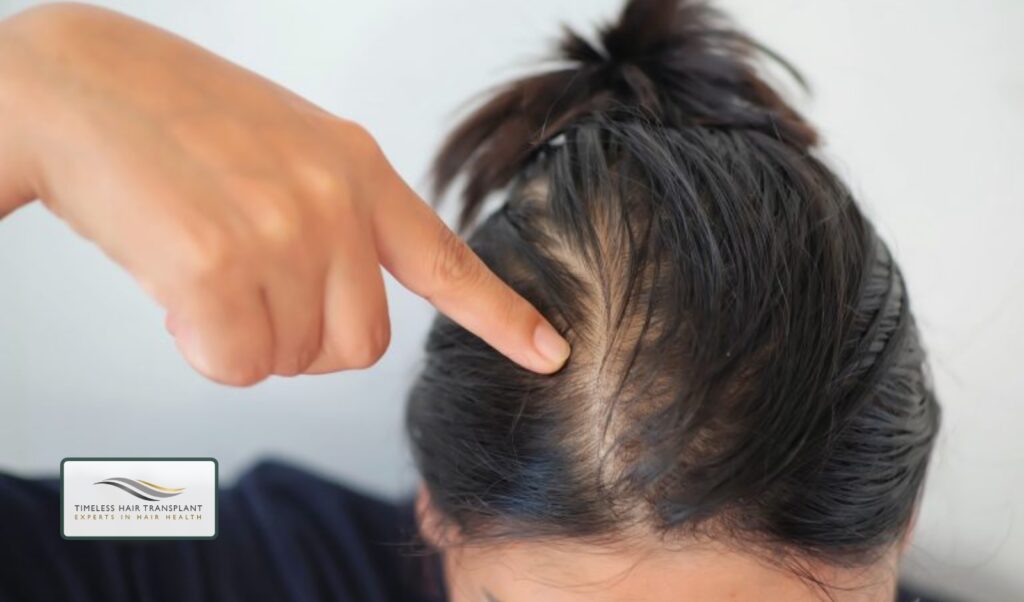
- Visible scalp in bright lighting
- Increased hair shedding
- Thinning hair that lacks volume
These signs may develop gradually, making them easy to overlook at first.
How Hair Follicles Are Affected
Hair follicles are responsible for producing new hair.
When affected by conditions like androgenetic alopecia, follicles become smaller and produce thinner strands. Over time, this can lead to reduced hair density and visible crown hair loss.
Protecting hair follicles is essential for maintaining healthy hair.
Can Crown Hair Grow Back?
Hair regrowth is possible depending on the cause and stage of hair loss.
In the early stages, improving scalp health and reducing stress on the hair can support recovery. However, if hair follicles are severely damaged, regrowth may be limited. Early treatment improves the chances of restoring hair density.
Treatment Options for Crown Hair Loss
There are several treatment options available for managing crown hair loss in women.
Lifestyle and Hair Care Changes
Using gentle hair care routines and avoiding tight hairstyles can help reduce damage.
Medical Treatments
Doctors may recommend treatments based on the underlying cause.
Hair Transplant
In advanced cases, a hair transplant may be considered to restore hair density at the crown.
Supportive Hair Care Products
Products designed for thinning hair can help improve appearance and support healthy hair.
How to Promote Healthy Hair Growth
To support healthy hair growth:
- Maintain a balanced diet
- Reduce stress levels
- Avoid excessive heat styling
- Use gentle hair care products
These steps help protect hair follicles and improve overall hair condition.
Preventing Further Hair Loss
Preventing crown hair loss involves:
- Avoiding tight hairstyles
- Protecting the scalp
- Addressing hair shedding early
Taking early action can slow progression and improve outcomes.
When to Seek Professional Help
If you notice ongoing hair thinning or reduced hair density, it is important to consult a specialist.
A professional can:
- Identify the cause
- Recommend treatment options
- Monitor progress
Early diagnosis helps improve long-term results.
Final Thoughts
Crown balding in females is more common than many people realise. While conditions such as female pattern baldness and hormonal changes can contribute to hair loss, early awareness and action can make a significant difference.
Understanding crown hair loss and exploring suitable treatment options can help protect the hair follicles and support healthier hair growth. With proper care and professional guidance, many women can manage thinning hair and maintain their confidence.
Restore Confidence With Expert Crown Hair Loss Solutions
If you are experiencing crown hair loss or thinning at the crown, early professional guidance can help identify the cause and improve treatment outcomes.
At Timeless Hair Transplant, we assess your scalp condition, hair follicles, and overall hair health to recommend personalised treatment options tailored to your needs. Call +441895248415 today or book your free consultation to explore effective ways to improve hair density and support long-term growth.
Frequently Asked Questions
What causes hair loss at the crown in women?
Hair loss at the crown in females can be caused by genetics, hormonal changes, ageing, or conditions such as androgenetic alopecia. These factors can cause hair follicles to produce thinner strands over time.
Is crown hair loss common in women?
Yes. Crown thinning is common in women and often develops gradually. It may appear as reduced hair density or increased scalp visibility around the crown.
Can female crown hair loss grow back?
Hair regrowth may be possible if the follicles are still active and the underlying cause can be treated. Early assessment can help identify suitable treatment options.
What is DHT, and can it cause hair loss in women?
DHT, or dihydrotestosterone, can contribute to androgenetic alopecia by causing sensitive hair follicles to shrink. Over time, this can lead to thinner hair and reduced density.
Can crown hair loss cause bald spots in women?
Yes, but women more commonly experience gradual or diffuse thinning at the crown. More noticeable areas of hair loss may develop depending on the underlying cause.
Is female crown hair loss the same as male pattern baldness?
No. Women typically experience gradual thinning and reduced density, while men more often develop a receding hairline or distinct bald areas. The pattern and progression can differ.